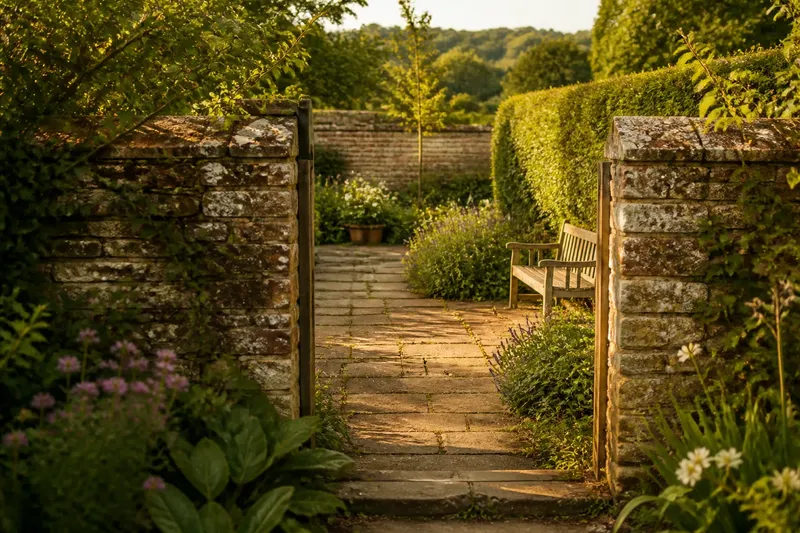
A Winter Garden Walk for Silhouette and Structure
A winter garden walk reveals the branches, seed heads and plant outlines worth noticing, helping you decide what to leave, prune or move into view.
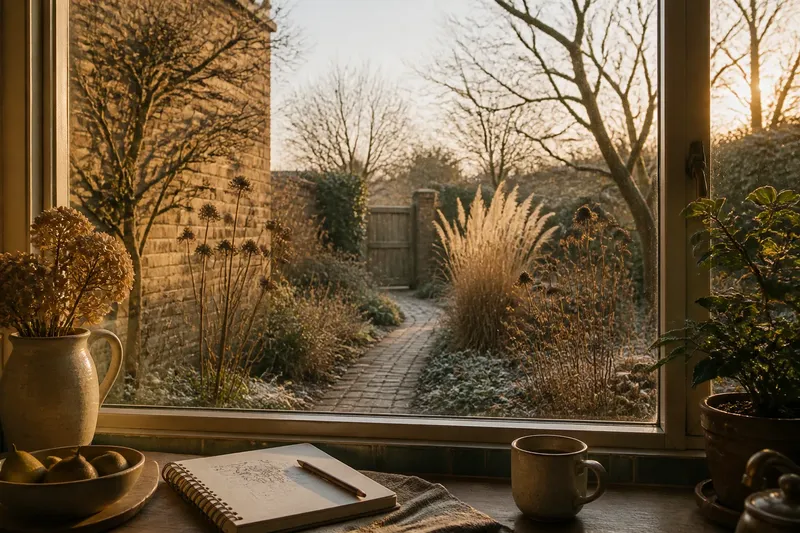
Which bare branches still look pleasing from your kitchen window, and which ones get in the way? A winter garden walk gives you time to notice silhouettes, seed heads and stems before pruning or clearing changes the scene. Follow the same route on several short visits, then use what you observe to make small, considered decisions.
Choose a route you can repeat
Pick a loop that passes a few different views: the front gate, a path beside a border, a sheltered corner and a window you often look through. You do not need to cover every bed. A familiar route makes subtle changes easier to spot, such as a branch that dominates one view or a seed head that catches low light.
Walk in dry weather, then return after rain or frost if conditions allow. Wet stems may bend and darken, while frost can outline fine twigs. Avoid stepping onto saturated beds, where footfall can compact soil or damage resting plants.
Take a small notebook and pencil rather than a full gardening kit. To compare views, sketch from a fixed spot or take a photograph from the same position each time. Note the date and weather so you can tell a lasting feature from a temporary change in conditions.
Begin with the view from indoors
Before going outside, look through the windows you use most. In winter, garden structure matters from the kitchen table or a favourite chair, where the view is part of daily life. Notice which stems and branches make a clear outline against a wall, fence or pale sky, and which areas seem empty.
Then step outside and stand where the window view begins. A shrub that appears balanced indoors may block a gate or lean awkwardly over a path. Compare the views before deciding that anything needs cutting back.
Imagine you have a small courtyard with a bare climbing rose against a brick wall. From the kitchen, its crossing canes make the wall look busy; from the doorway, they frame the view beyond. Write down both observations, then check how the rose is meant to be trained before considering substantial pruning.
Read the outline of branches
Look at trees and shrubs from a little distance, then move closer. From afar, you can see the broad shape: upright, arching, rounded or spreading. Nearby, notice how stems separate or cross, and whether they draw your eye towards a path or window.
Ask whether a plant’s silhouette has a clear edge against its background. A dark evergreen may disappear against a shaded fence, while pale bark can stand out against a dense hedge. A small change of viewpoint may reveal a better outline without cutting anything.
Note branches that rub, obscure a useful sightline or overhang a route rather than reaching for secateurs during the walk. Pruning needs to suit the plant and season. For questions about a tree’s health or safe management, consult a reliable plant guide or qualified arborist.
Notice the seed heads and stems that remain
Perennials and grasses leave different kinds of winter structure. A dried umbel may form a lacy dome; upright grass stems may make a soft screen; dark, flat seed heads can stand out against snow or a pale wall. Look at shape, height and texture, not only at whether a plant appears tidy.
Observe how each plant behaves in its setting. A seed head that looks handsome in a sheltered border may collapse across a narrow path after rain. Ornamental grass might screen an unappealing corner, yet its loose outline could look more natural from the lawn than close up.
Check for signs of wildlife as well as appearance. Seed heads may still provide food, while hollow or dense stems can offer shelter to small creatures. If a plant causes no practical problem, leaving it in place for now preserves both winter structure and your options.
Follow the light and the weather
Return at a different time of day if you can. Low winter sun can cast long branch shadows across a wall or path, making a modest shrub suddenly prominent. On a grey afternoon, the same plant may blend into its surroundings, while fine stems show clearly against a bright sky.
Wind adds movement. Watch from a sheltered spot to see whether tall stems bow gently or whip against one another. If a plant repeatedly pushes across a path, note the obstruction; if it simply sways, that motion may bring life to an otherwise still view.
After rain, note which seed heads hold water and which stems remain upright. This helps you distinguish a temporary weather effect from a shape that is consistently awkward in its setting.
Use four short visits to decide what changes
Spread your observations across four short visits rather than trying to settle every question in one outing. Each pass has a clear focus, and the last gives you time to decide what, if anything, needs attention.
- First visit: Walk the whole route without pruning or clearing. Sketch the views that catch your eye; if a plant’s outline pleases you, mark it to leave for now, and if it seems unclear, note the spot for another look.
- Second visit: Stand at the main windows and paths. If a branch or stem blocks a view or narrows a route, record its location and consider a suitable adjustment later; if it causes no daily difficulty, leave it on your observation list.
- Third visit: Look closely at seed heads and grasses. If stems remain upright and wildlife appears to use them, leave them in place for now; if they have fallen across a path, note the obstruction and consider a limited tidy-up when appropriate.
- Fourth visit: Return after a change in light or weather. If the same concern remains, mark it for a closer check; if it disappears in different conditions, record it as a temporary effect and avoid acting on that impression alone.
Say you have a narrow path beside a clump of ornamental grass. On the first visit, you sketch the stems leaning towards the path; on the second, you note that they narrow the route; on the third, you see that the clump still stands upright and has no visible sign of wildlife use; on the fourth, after a dry, still day, it continues to lean across the path. Your notes point to a practical obstruction rather than a passing effect, so you can check the plant’s seasonal care and choose a limited adjustment instead of clearing the whole border.
If the week is wet or icy, keep to firm paths and observe from a doorway instead. A clear view is more useful than a close inspection that risks a slip or damages a bed.
What questions help with a winter garden walk?
When is the best time for a winter garden walk?
Choose a day when you can see the plants clearly and use paths safely. A bright morning may reveal branch outlines, while an overcast day can make contrasts against walls easier to notice.
Should I cut back seed heads during the walk?
It is usually more useful to note what you see and decide later. Leaving seed heads in place for now preserves winter structure and may retain food or shelter for wildlife.
What should I record in a winter garden notebook?
Write down the plant or location, its outline, the viewpoint and any practical concern. A quick sketch or photograph can capture branching patterns that are hard to describe.
How do I make a small garden look structured in winter?
Start by observing what is already visible from doors and windows: fences, evergreen foliage, pots, stems and branches. Consider whether moving a container or changing your viewpoint would make those existing forms easier to see.
Turn observations into restrained decisions
Review your notes and sort them into three groups: shapes you enjoy, plants that need a closer check and features that obstruct daily use. This keeps a winter walk from becoming an excuse to cut back everything that looks untidy. The aim is to respond to the garden you have, not erase every irregular line.
For a shape you admire, consider what helps it read clearly: perhaps the background is busy, or a nearby pot competes with it. For an obstruction, identify the smallest appropriate adjustment and check the plant’s needs before acting. If a tree limb is large, damaged or above a public route, ask a qualified arborist rather than attempting risky work yourself.
Keep a note for the next season, too. A bare shrub may reveal a gap for future planting, or a seed head may show where a perennial leans after rain. A winter garden walk is most useful when it leaves you with one clear, manageable decision and a reason to look again as the garden changes.