The Myth of the Perfectly Tidy Garden
A perfectly tidy garden is not the only route to good care. Learn what to leave alone, where to intervene and how to make maintenance more purposeful.
Does every untidy corner in your garden need attention? A perfectly tidy garden is not the only route to good care: the useful question is what each corner needs, and what can safely wait.
Neatness is a choice, not a measure of care
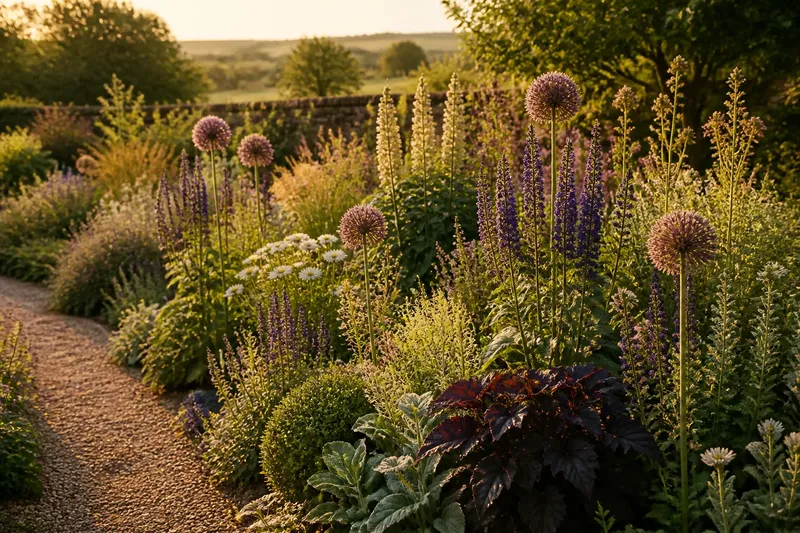
A garden changes continually: leaves fall, stems bend, seed heads darken and weeds appear. Some changes call for action; others are part of the garden’s ordinary cycle. A border with fading stems may be healthy and well tended, even if it would not look freshly groomed in a photograph.
Perfect neatness is a moving target. A clipped edge softens, a pot gathers fallen leaves, and a plant that looked orderly in spring may flop after flowering. If every visible change becomes a job, care can turn into cosmetic correction rather than a response to what plants and paths need.
Purposeful care begins by separating appearance from function. A clear route to the shed matters because people need to walk there. Bare soil beneath a plant may not matter at all. The same fallen leaves can be a nuisance on paving and useful cover beneath shrubs.
Choose one corner to assess before reaching for the rake.
Give each corner a job
Instead of assigning the whole garden one standard of tidiness, consider what each area is for. A front path may need to feel open and easy to sweep. A quiet bed behind a hedge might hold seed heads and leaf litter for longer. A vegetable bed may need regular clearing around young crops, while the space under a mature tree can tolerate a looser finish.
This is not a rule that every garden must contain a wild patch. It is a way to make decisions based on use, visibility and plant needs rather than an automatic demand for uniform neatness. A corner can be informal and still be deliberately cared for.
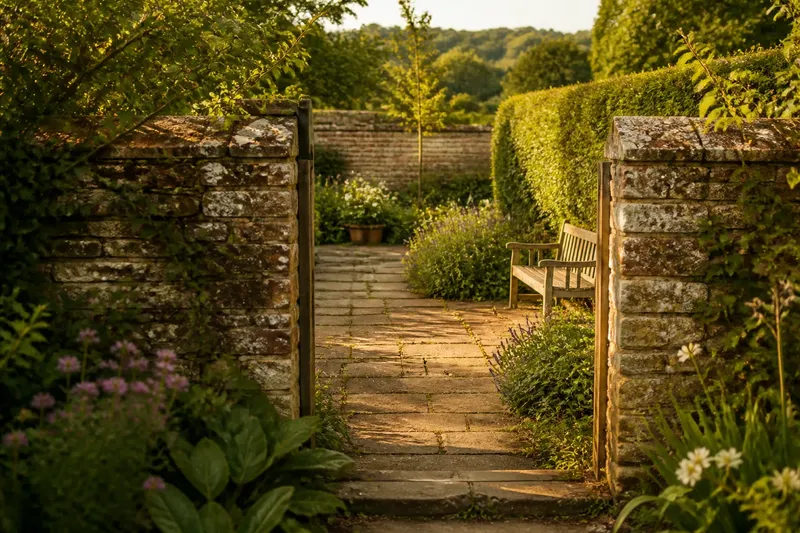
- Routes: If paving, steps or gates are obstructed, clear them; if they are open and easy to use, leave nearby planting alone.
- Growing areas: If unwanted growth is crowding plants you are tending, remove or manage it; if it is not affecting them, leave it for now.
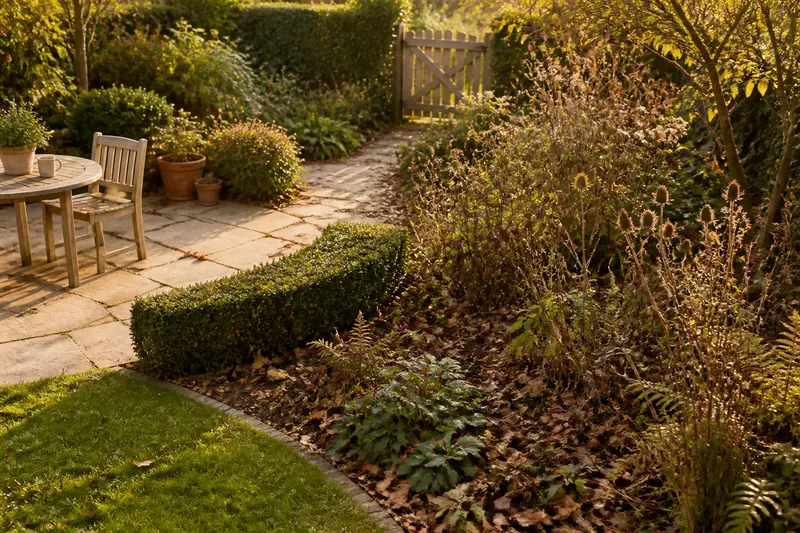
- Resting places: If chairs or tables are hard to use, clear the immediate area; if they are usable, let nearby planting soften at its own pace.
- Quiet edges: If fallen leaves cover small plants or obstruct access, move them to a suitable spot; if neither applies, they can remain.
- Views from indoors: If an area looks busy in a way that bothers you, define or edit that view; if it provides a welcome softer background, leave it as it is.
- Drainage points: If leaves are blocking a drain, clear the obstruction; if the drain is open, there is no need to rake the whole bed.
Say you have a narrow bed beside a patio where leaves are collecting. Sweep the paving so the sitting area stays clear, then move the leaves beneath a shrub if they are covering smaller plants in the bed. The result is an open patio and a bed where leaves remain only where they are not smothering growth.
Let plants finish at their own pace
Faded flowers and drying stems are not automatically signs of neglect. A plant does not always need to be cut back as soon as its display changes; seed heads may remain part of the planting, and some stems offer structure after flowering.
Leaving a plant alone does not mean ignoring it indefinitely. Look for signs that it is blocking a path, leaning into a neighbour or causing a problem in its particular spot. If none applies, postponing a cosmetic cut can be a considered choice.
Different plants and garden conditions call for different care. Check the plant label or grower’s instructions where timing or handling matters, and follow local rules where they apply.
Before cutting back a faded plant, ask whether it is causing a practical problem or simply looking less polished.
Use boundaries to make a loose garden feel intentional
A relaxed corner is easier to read when it has a clear edge. A mown strip beside longer growth, a defined path through a planting area or a border meeting a clean paving line can make an informal patch look considered. The boundary gives the eye a point of order without requiring every plant inside it to be clipped or cleared.
Keep the boundary modest. A narrow, maintained edge can distinguish a planted area from a route or lawn. It need not become another demanding feature: choose a line that is easy to reach with the tools you already use, and avoid shapes that call for frequent trimming if that is not work you want.
Material can help too. A line of stone, a simple path or the edge of a raised bed can mark where one kind of care gives way to another. The aim is to make your decision legible: this is a place where growth may remain, and that is a place kept open for use.
When should garden tasks take priority?
When time is short, a garden-wide tidy can feel like the obvious answer. It is often more useful to rank jobs by consequence. A blocked drain or slippery path deserves attention before a few untidy stems. A young plant crowded by vigorous growth may need help before you sweep every leaf from a quiet bed.
A brief walk can reveal where effort matters most. Look for obstructions, unwanted growth affecting plants you value, and places where fallen material is causing a real nuisance. Leave purely cosmetic jobs until you have time, or decide they are not necessary at all.
This approach can also prevent unnecessary work. If you repeatedly clear a spot only for leaves to return, consider whether the material could stay elsewhere or be gathered less often. Changing its destination may solve the annoyance without constant removal.
Should leaves stay in a garden bed?
They can stay where they are not smothering smaller plants or obstructing access. Check what is growing below; if leaves cover plants that need space or light, move them to a suitable spot.
Should every faded flower be deadheaded?
No single rule suits every plant or garden. Deadheading may suit a display you want to tidy or where you want to limit seed formation; otherwise, leaving flowers can fit your preferences. Check the plant’s care guidance if you are unsure.
How can a loose garden corner look deliberate?
Give it a clear edge, such as a maintained path, a mown strip or the line of a bed. Keep the adjoining route usable, then let plants within the boundary change at their own pace.
What should be tidied first?
Start with anything affecting access, comfort or plants you are actively tending. Clear a gate or path before removing every faded stem from a quiet border.
Make the decision visible in your routine
A purposeful garden routine does not need a complicated plan. On each visit, choose a practical task and one area you are intentionally leaving alone. That distinction can stop an unfinished-looking corner becoming an automatic chore.
You can adjust your standard as the seasons change. A bed that benefits from a clear surface during active growth may suit a looser finish later, while a path that is pleasant in dry weather may need attention when leaves make it slippery. Respond to what you can see and use, rather than following a fixed demand for constant tidiness.
The myth of the perfectly tidy garden rests on the idea that care must look the same everywhere. In practice, a clear route, a tended growing space and a quieter patch left to change can belong in the same garden. For a perfectly tidy garden that still feels cared for, let each corner’s purpose—not a spotless finish—guide your next decision.